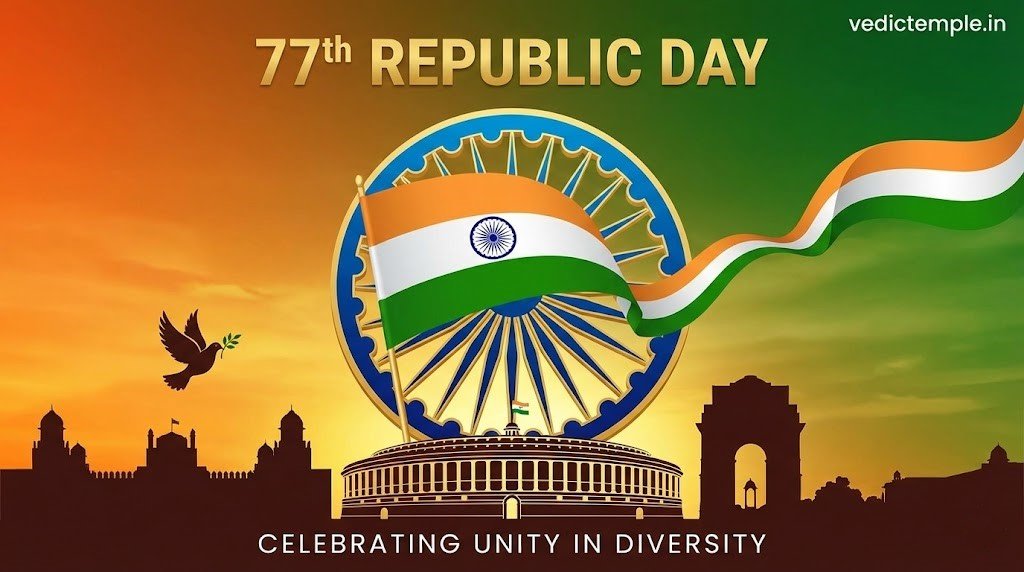
As the calendar turns to January 26th, the streets of India are awash in saffron, white, and green. We watch the grand parade, we share patriotic messages, and we enjoy a national holiday. But amidst the celebrations, it is easy to overlook the profound gravity of this day.
Republic Day is not just a celebration of India’s military might or cultural diversity; it is the celebration of the very document that binds us together—the Constitution of India. It marks the day India truly became "free" in spirit and law.
The History: Why January 26th?
A common question often asked is: If India gained independence on August 15, 1947, why do we celebrate Republic Day on January 26, 1950?
The answer lies in a pledge made 20 years earlier.
1. The Pledge of Purna Swaraj (1930)
The story begins on January 26, 1930. On this day, the Indian National Congress, led by leaders like Jawaharlal Nehru and Mahatma Gandhi, historically proclaimed "Purna Swaraj" (Total Independence) from British rule. For the next 17 years, freedom fighters celebrated January 26th as Independence Day. It was a day of defiance and hope.
2. The Transition Period (1947–1950)
When India finally gained freedom on August 15, 1947, we were free from British rule, but we were still a constitutional monarchy (a Dominion) with King George VI as the Head of State. We did not have our own permanent laws.
3. The Making of the Constitution
A Constituent Assembly was formed to draft the law of the land, with Dr. B.R. Ambedkar as the Chairman of the Drafting Committee. It was a herculean task to write a constitution for a nation as diverse as India. After 2 years, 11 months, and 18 days of rigorous debate and drafting, the Constitution was ready.
While it was adopted on November 26, 1949, the leaders decided to wait two months to officially enforce it. They chose January 26, 1950, to honor the original "Purna Swaraj" declaration of 1930. On this day, Dr. Rajendra Prasad took the oath as India's first President, and the Republic of India was born.
The Importance: Why This Day Matters
Republic Day is significant because it represents the soul of the Indian nation. Here is why it is crucial:
-
Rule of Law: On this day, the Constitution of India became the supreme law of the land. It replaced the colonial Government of India Act (1935). It ensured that India would be governed by laws made by its own people, not by a foreign crown.
-
Power to the People: Republic Day celebrates the fact that India is a "Republic." This means the head of our state (The President) is elected, not hereditary. It signifies that the ultimate power lies in the hands of the citizens who vote.
-
Fundamental Rights: The Constitution gave every Indian citizen Fundamental Rights—the right to equality, freedom of speech, freedom of religion, and protection against exploitation. Republic Day is a celebration of these liberties.
-
Unity in Diversity: The Constitution united over 500 princely states and diverse cultures into one single Union of India. The Republic Day parade serves as a visual reminder of this unity, showcasing that despite our differences, we are one.
Conclusion
Republic Day is a reminder that freedom is not just about the absence of foreign rule; it is about the presence of a system that guarantees justice and equality.
As we celebrate this day, let us not just look at the sky for the flypast; let us look within. Let us honor the vision of our forefathers by being responsible citizens who uphold the values of the Constitution.
Happy Republic Day! Jai Hind.