Kundli Milan: What It Actually Means and Why People Still Do It
People talk about Kundli Milan like it's some magical marriage test. You give birth details, get a score out of 36, and suddenly everyone knows if the marriage will work. Truth is, it's more complicated than that—and also simpler.
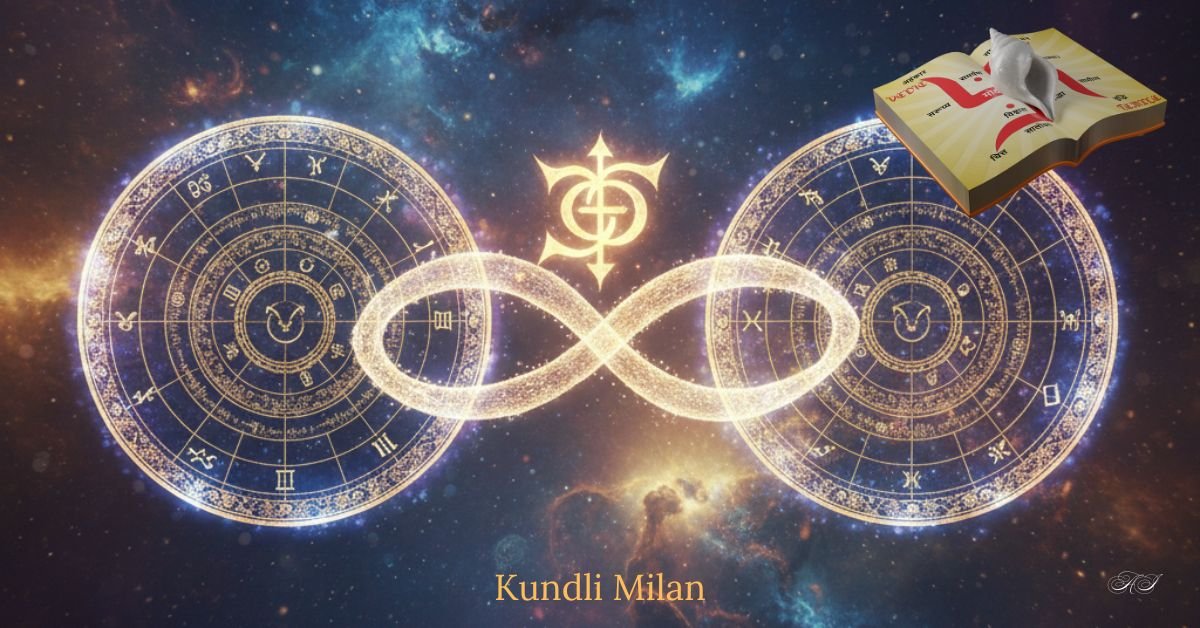
Kundli Milan is just comparing two birth charts to see how well the energies match. It's not about predicting divorce dates. It's about understanding friction points before they become problems. Done right, it shows where you'll naturally understand each other and where you'll need to work.
The Ashtakoot System (The 36-Point Score)
Everyone talks about "36 Gunas." That's the Ashtakoot system—eight factors that get scored. Maximum 36 points. Above 28 is good. Below 18 is risky. But it's not just a number.
Here's what they actually measure:
1. Varna (1 point) - Spiritual compatibility and ego levels. Brahmin (highest) to Shudra (lowest). Shows how you relate on a values level.
2. Vashya (2 points) - Mutual attraction and control dynamics. Who naturally leads, who follows. Human, animal, insect classifications.
3. Tara (3 points) - Health and longevity. Your stars' compatibility for long life together.
4. Yoni (4 points) - Sexual compatibility. Animal symbols for each nakshatra. Horse, elephant, snake, etc. Blunt but practical.
5. Graha Maitri (5 points) - Mental compatibility. Friendship between your moon sign lords. How well your minds click.
6. Gana (6 points) - Temperament. Deva (spiritual), Manushya (human), Rakshasa (demonic). Behavior patterns.
7. Bhakoot (7 points) - Emotional and financial compatibility. Moon sign relationships. Some combinations get zero points.
8. Nadi (8 points) - Health and genetics. Three types (Adi, Madhya, Antya). Same Nadi = zero points, supposed health risks.
The math is simple. But interpretation? That's where astrologers differ wildly.
What the Numbers Actually Mean
36/36 perfect? Never happens. Even 32+ is rare. Don't chase perfection.
28-32: Excellent. Natural harmony, minimal friction. Green light.
18-27: Average. Workable with conscious effort. Most marriages.
Below 18: Risky. Serious incompatibilities. But not impossible—many couples make it work.
The bigger problem: Low scores in Nadi or Bhakoot (major points) matter more than scattered deductions across minor gunas. A 25 with good Nadi/Bhakoot beats a 30 with Nadi dosha.
The Real Red Flags (Beyond Gunas)
Smart astrologers look beyond the 36 points:
Mangal Dosha - Mars in 1st, 4th, 7th, 8th, or 12th house. Supposed marital discord. But cancels out if both charts have it.
Nadi Dosha - Same Nadi type. Biggest point deduction. Health/genetic concerns.
Bhakoot Dosha - Certain moon sign combinations (5-9, 6-8, 2-12). Emotional/financial stress.
Kuja Dosha, Pitra Dosha - Family curse patterns. More cultural than strictly astrological.
These aren't deal-breakers. Remedies exist. But they signal areas needing attention.
How It Actually Works in Practice
Step 1: Get accurate birth charts. Time of birth matters most. Wrong time = wrong everything.
Step 2: Run Ashtakoot matching. Basic compatibility score.
Step 3: Manual analysis. Dasha periods, planetary aspects, house strengths. This takes experience.
Step 4: Discuss red flags and remedies. Mangal dosha puja. Nadi shanti homa. Gemstones. Mantra practice.
Good astrologers spend more time on discussion than calculation. They ask about your expectations, family dynamics, life goals. Charts don't exist in vacuum.
The Modern Reality
Here's what nobody says out loud: Kundli Milan works better as a discussion tool than a pass/fail test.
It forces families to talk about:
-
Expectations (career woman vs. homemaker?)
-
Values (joint family vs. nuclear?)
-
Priorities (kids now vs. career first?)
-
Deal-breakers (smoking, drinking, politics)
These conversations prevent bigger problems later. The astrology just structures the discussion.
Data point: Studies show arranged marriages with Kundli matching have similar divorce rates to love marriages (low in India). The matching isn't magic—it's the family vetting process that works.
When It Actually Helps
Good for arranged marriage scenarios where families want objective criteria beyond "he seems nice."
Useful for identifying blind spots—emotional mismatches, health concerns, temperament clashes you might ignore when infatuated.
Practical for cross-cultural matches—when values might differ significantly.
Not useful for: People who ignore red flags anyway, or couples already committed regardless of stars.
The Remedies Angle
Every dosha has a fix. That's Vedic tradition. But remedies work best when you actually believe in them:
Mangal Dosha: Tuesday fasts, Hanuman worship, coral gemstone (after consultation).
Nadi Dosha: Specific homas, temple visits, charity.
General: Matching dashas (when planets support marriage), lifestyle adjustments.
Smart couples treat remedies as relationship work. Mangal dosha puja becomes marriage preparation counseling. Nadi shanti becomes family bonding time.
The Bottom Line
Kundli Milan isn't fortune-telling. It's pattern recognition. Two people with fundamentally incompatible energies will struggle. Two with natural harmony get a head start.
Do it if:
-
Arranged marriage context
-
Family values the tradition
-
You want objective input on compatibility
-
Red flags emerge during courtship
Skip it if:
-
Deeply in love and ignoring all red flags anyway
-
Modern nuclear family uninterested in tradition
-
One partner dismisses astrology completely
Best approach: Use it as one data point among many. Combine with actual conversations, shared values, mutual respect. Charts predict tendencies. Character determines outcomes.
Most successful marriages defy perfect 36/36 scores through conscious effort. Most failed marriages ignore obvious 18/36 red flags through denial. The stars suggest. You decide.