Most people think there's one perfect time to do puja. There isn't. But there are times that work better than others, and understanding why helps you build a practice that actually lasts.
The Traditional Answer (Brahma Muhurat)
If you ask a pandit or read the old texts, they'll point you toward Brahma Muhurat—that window about 1.5 to 2 hours before sunrise when the world is still quiet and the mind is naturally clear.
The logic is sound. The air is freshest. Your body hasn't yet been pulled into the day's demands. Your mind hasn't filled up with work stress, family chaos, or phone notifications. This time genuinely does feel different. If you've ever woken up that early, you know the quality of silence is almost palpable.
But here's what happens in real life: You have a job that starts at 8 AM. Or kids who need breakfast. Or you're a night person and waking up before dawn feels like torture. Brahma Muhurat is beautiful in theory. It's brutal if you can't maintain it.
The actual rule is simpler: A puja you actually do regularly beats a perfect puja you do rarely.
Early Morning (Before 9 AM)
If Brahma Muhurat isn't realistic, early morning still works extremely well. Somewhere between sunrise and mid-morning—say, 6 to 8:30 AM—carries much of the same benefit.
Your mind is fresher than it will be at noon. Your energy is higher. The house tends to be quieter before everyone wakes up or before you head out. You set a spiritual tone for the entire day. There's actual science here: something you do with focus and intention first thing in the morning genuinely affects your mental state throughout the day.
For people with work or school, an early morning puja doesn't have to be long. Even 15 minutes of focused practice—lighting a diya, chanting a simple mantra, making an offering—is vastly more powerful than rushing through something elaborate.
The advantage: You're done. Nothing can derail it. By the time your phone starts buzzing, you've already spent intentional time in spiritual practice.
Evening Around Sunset (Sandhya)
If mornings are impossible, evening around sunset is genuinely the next best option. There's something about that transition time—day turning to night—that naturally invites reflection and spiritual practice.
Lighting a diya at sunset isn't just symbolic. It's practically meaningful. The light from that small flame becomes more visible as darkness approaches. You notice it. It has weight. Many cultures and traditions light lamps at this time precisely because the gesture carries real spiritual significance.
An evening puja can be simple:
-
Ten minutes after returning from work
-
A small clean space with a lamp and incense
-
A few minutes of silent sitting or simple chanting
-
Gratitude for the day
People who do evening puja often report that it cleanses the day's stress and creates a peaceful transition into night. They sleep better. They feel calmer. That's not coincidence.
The challenge with evening: Life gets in the way. Someone needs dinner. You're tired. By the time you remember, it's already 9 PM. Having a fixed time—say, 6:30 PM, immediately after you arrive home—helps lock it in before other demands grab you.
Matching Time to Your Deity
Certain deities have traditional timing preferences, though flexibility is built in:
Shiva responds well to early morning (especially Mondays) and also to night-time practice. Many serious Shiva practitioners do sadhana late at night or in deep morning hours. If that's your practice, it works.
Hanuman is often worshipped in the morning or evening, with Tuesday being particularly auspicious. A quick morning or evening Hanuman Chalisa takes maybe 10 minutes and carries real power.
Lakshmi/Vishnu are generally worshipped in the morning or late morning, with Friday being favorable. Evening aarti for these deities also works well.
Devi/Durga traditionally receives worship in the morning and evening both. During Navratri, many people do twice-daily puja naturally.
But honestly? Your deity cares more about your sincere presence than about hitting the technically perfect hour. Consistency and genuine devotion matter more than textbook timing.
The Real Factor: Can You Do It Every Day?
Here's what actually matters: Choose a time you can realistically sustain.
Some people commit to 5 AM puja, do it for two weeks, then fall off because their body and life can't sustain it. Then they feel guilty and eventually stop trying.
Others pick 7 PM, do it daily for years, and build a genuine spiritual practice.
The second person got better results despite starting later.
Ask yourself honestly:
-
What time can I genuinely protect for puja?
-
When is my mind most clear without pushing myself?
-
When does my family naturally give me space?
-
What's realistic for my actual life, not my ideal life?
Answer those questions and you've found your time.
Making It Stick: Practical Tips
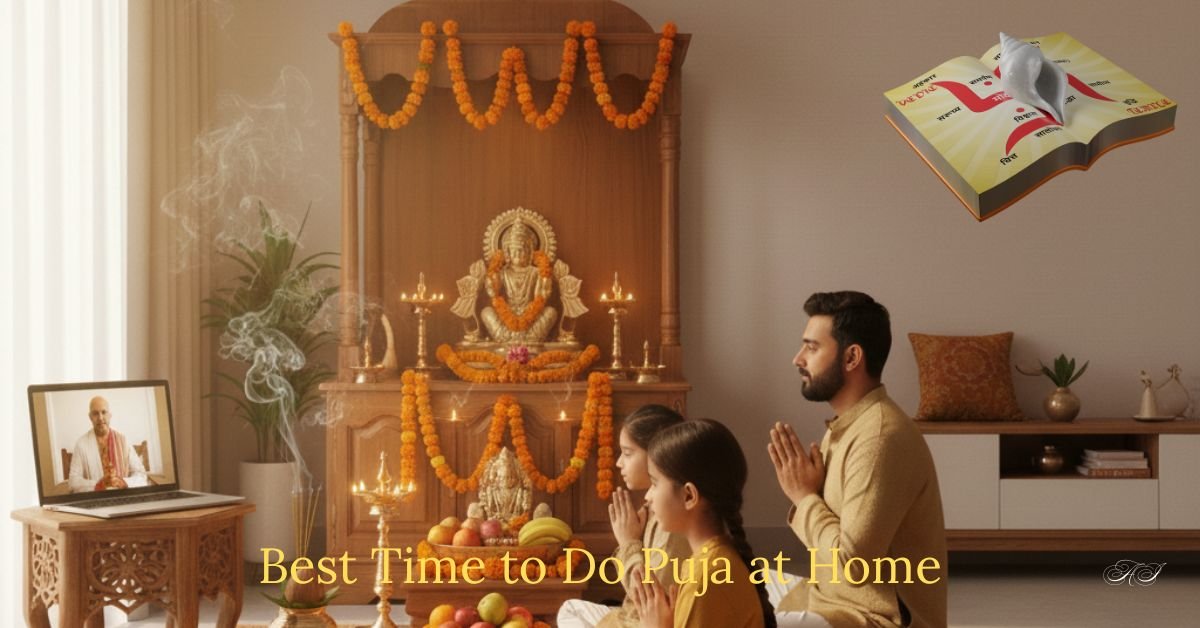
Create a small, dedicated space. A corner with your deity's image, a diya, and incense. Seeing it ready makes you more likely to sit down.
Set the same time daily. Your body and mind get into rhythm. Eventually, you'll naturally be drawn to that time.
Keep it short enough to be realistic. 15–20 minutes of actual focused practice beats 45 minutes done half-heartedly or skipped entirely.
Don't demand perfection. Some days you'll be distracted. Some days you'll be tired. That's normal. Do the practice anyway. The point is consistency, not flawlessness.
Tell family members. "From 7 to 7:15 PM, that's my puja time" gives everyone—including you—permission to protect that window.
The Real Truth
The best time to do puja at home is the time that actually happens. Early morning is traditionally considered superior, but an evening practice done consistently for years beats a sporadic morning practice done when you feel motivated.
Tradition gives us guidelines. But your life is real. Your schedule is real. Your struggles are real.
Find the time that fits, commit to it, and you'll build something genuine. That matters more than any textbook rule.